For Australian players looking for up-to-date platforms with fast withdrawals, it’s worth checking out the best new online casino sites Australia 2026 with real money pokies and PayID payouts. This guide breaks down the real terms offered by offshore operators, PayID transaction speeds, and how to tell a reliable platform from a mediocre one. It’s especially useful for anyone who wants to play for real money without waiting weeks for a payout.
Choosing the right deposit and withdrawal option can make or break your online casino experience, so it’s worth reviewing the best online casino payment methods for Aussies in 2026 before you sign up anywhere. This breakdown covers real processing speeds, hidden fees, and the offshore realities that Australian players need to understand. It’s a solid starting point for anyone who wants faster payouts and fewer surprises.
If you’re chasing bigger wins, it helps to know which titles actually deliver, so check out the best paying online pokies in Australia for 2026 before your next session. This guide highlights the machines with the highest RTP and most generous payout potential for Aussie players. It’s a handy reference for anyone who wants more value from every spin.
Before you commit to a new platform, it pays to compare what’s on the table, so start with this guide to the best welcome bonus online casino offers in Australia for 2026. It walks through sign-up promotions, wagering requirements, and the fine print most players overlook. A quick read here can mean the difference between a genuinely useful bonus and a wasted deposit.
For Aussie players who prefer a secure e-wallet over traditional banking, it’s worth exploring the casino sites that accept ecoPayz in Australia for 2026. This roundup covers platforms offering fast deposits, quick withdrawals, and solid bonuses for ecoPayz users. It’s a practical shortcut for anyone who values privacy and speed in their transactions.
Australian players who want to skip the guesswork can head straight to this guide to the best real money online casinos in Australia for 2026. It covers licensed offshore operators, banking options, and the key factors that separate trustworthy sites from risky ones. A useful read for anyone serious about playing for genuine cash rewards.
Prepaid payment options remain a popular choice for players who want to keep their banking details private, so it’s worth reviewing the casino sites that accept Paysafecard in Australia for 2026. This complete guide covers prepaid pokies, deposit limits, and how to cash out winnings from a voucher-based account. A handy resource for anyone who prefers top-up control over linking a card or bank account.
Players who value fast payouts and airtight security often turn to e-wallets, so it’s worth exploring the casino sites that accept Skrill in Australia for 2026. This guide breaks down e-wallet architecture, real payout speeds, and where to find genuine real money pokies. A smart starting point for anyone who wants deposits and withdrawals handled in minutes rather than days.
Finding a casino that supports your preferred banking method can save a lot of frustration later, so it’s worth checking out the casinos that accept MiFinity in Australia for 2026. This guide covers payment options, available pokies, and how withdrawals actually work for Aussie players. A practical read for anyone who wants a smooth, wallet-based casino experience.
Nobody likes waiting days for their winnings, so if speed matters to you, start with this guide to the best fast payout online casino in Australia for 2026. It compares withdrawal times across top platforms and highlights which ones actually pay out within hours. A must-read for players who want their cash without the usual delays.
PayID has quickly become one of the most convenient ways for Aussies to fund their casino accounts, so it’s worth reading this complete guide to new PayID pokies in Australia for 2026. It explains how to make fast, fee-free deposits and which platforms support the method properly. A great starting point for anyone who wants instant transfers without the usual banking headaches.
Getting your winnings quickly is one of the biggest priorities for any online player, so this complete pillar guide to a fast withdrawal casino in Australia for 2026 is well worth a look. It covers payout speeds, verification requirements, and the payment methods that actually deliver on their promises. An essential read for Aussies who don’t want to chase their cash for weeks.
If maximising your returns is the goal, it pays to know which platforms actually deliver, so dig into this definitive guide to the highest payout online casino in Australia for 2026. It breaks down real RTP figures, payout percentages, and how to spot operators that genuinely pay more. A valuable resource for players who want every dollar to work harder.
Not everyone wants to risk a large bankroll straight away, which is why this guide to a low deposit online casino in Australia for 2026 is worth a look. It covers small deposit options, PayID and crypto funding, and everything Aussies need to know before signing up. A smart read for players who want to start small without missing out on the fun.
Safety should always come first when real money is on the line, so it’s worth reviewing this breakdown of the most secure online casino in Australia for 2026. It covers technical safety audits, encryption standards, and the real money protocols that protect players. An essential read for anyone who wants peace of mind alongside their gameplay.
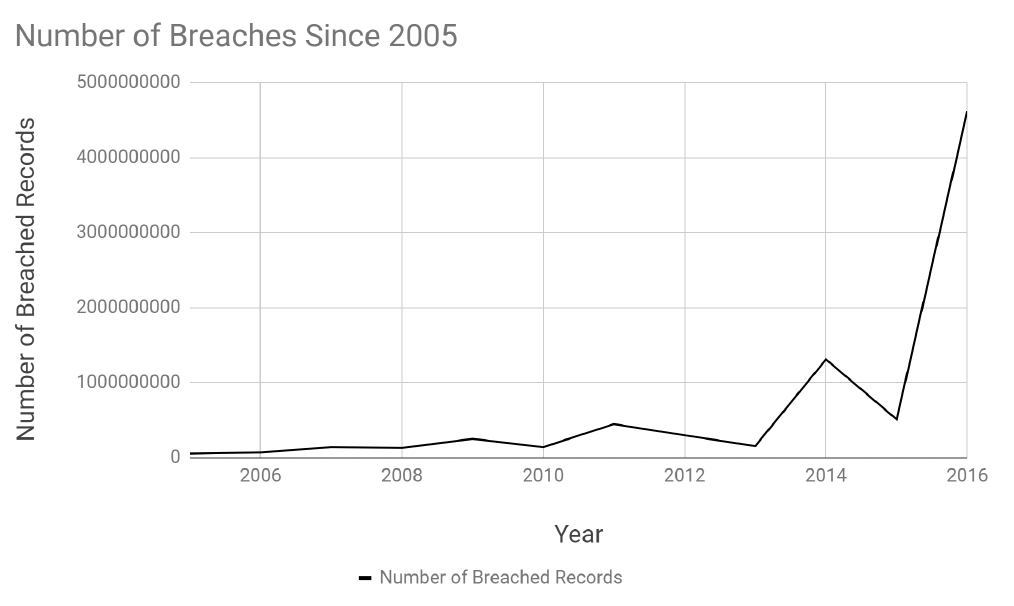
Increasing incidences of data breaches have led to more stolen identities on dark net markets. This has driven down the prices of various forms of personal identity online.
Here is how the number of personal breaches has changed over the years.
Advent of the internet has led to more mature, differentiated–between retail and wholesale– marketplaces for stolen goods over the years.
Online identity theft has evolved from aiming to just acquire data to oversupplying markets, leading to market-pages for specialisations in fraud, with stolen identities to retailing overly cheap identities with supplementary services.
First Generation: Internet-based identity theft
In 2002, there were 89,000 reported cases of online identity theft in the US. These were usually committed by individuals, and uncommonly by fraud rings. These individuals monetised thefts themselves as a result of underdeveloped markets and players.
The most sophisticated fraud ring was the Campbell Organisation, a group of fewer than twenty individuals responsible for $3 million in losses and the theft of about 150 identities in Florida.
Identities were primarily used and rarely sold. There was a specific focus on stealing Social Security Numbers (SSNs)3. Thieves would use identities to obtain bank accounts and loans, buy goods, etc.
Second Generation: Internet auctions and large-scale breaches
The second generation of online identity theft was marked by large-scale data breaches, more organisation in the markets and criminal groups, increased segregation between the individuals obtaining the identities and those cashing in on them, and the creation of free markets to auction and retail identities.
There was a continued focus on social security number, with a premium price on newly stolen identities4. Auctions remained popular on the wholesale side and bundles of identities became available for sale on dedicated forums.
In 2000, the largest confirmed breach of social security numbers to-date was by a hacker at the University of Washington Medical Center, who stole 5,000 records5.
Comparatively, in 2017, an Equifax breach resulted in the theft of the social security numbers (and substantially more sensitive personally identifiable information) of 143 million individuals in the United States6.
As the number of records being breached increased, the ability for a single individual or group of individuals to cash out became increasingly difficult, resulting in a differentiation between the individuals stealing the identities and the individuals operationalising fraud schemes based on the stolen identities7.
Third Generation: Specialisation, and value-adding services
Identity theft was now ubiquitous, with 1.077 billion identity records stolen just in the US as of 20188. Technological changes such as Tor (“The onion router”), a private browser for the dark net, and cryptocurrencies altered the risk/benefit ratio of identity fraud.
These technologies provided anonymous access, security, and payment methods. Given the reduced risk, individuals who would otherwise be disinclined to commit identity theft began selling identities.
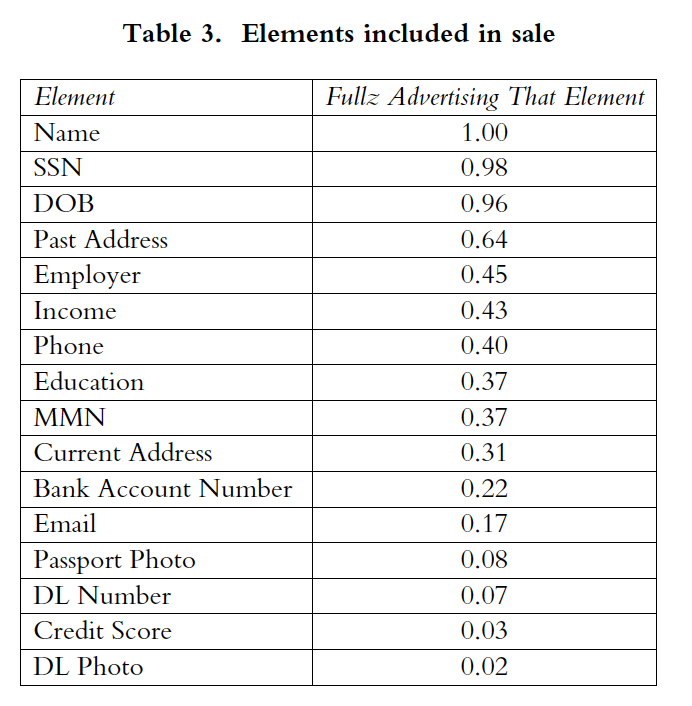
The stolen identities, colloquially labelled “fullz”, got cheaper– from $10 in 2007 to $0.10 in 20169— and less useable. Below are the various identity elements and how often they are listed in ads.
Sellers and marketplaces also started adding services to enhance their allure. Markets like RSClub and Tochka offered Pretty Good Privacy (PGP) encryptions of all transaction records making transactions private.
A third of sellers offered buyers the ability to select specific credit score ranges for their purchases. ~10% of the sellers advertised the ability to source identities from the demanded states or zip codes.
As stolen identities have gotten cheaper due to over-supply, sellers have adopted technologies and augmented their goods with services to increase the price and their profits.
References:
1. Privacy rights clearinghouse – Data breaches by year, 2017
2. Stearns, 2001
3. Berghel, 2000
4. Newman & Mcnally, 2005
5. Tehan, 2008
6. “Nearly half of US citizens hit by massive Equifax breach,” 2017
7. Steel, 2019
8. “Identity theft resource center,” 2018
9. Symantec
Subscribe to my mailing list to be notified about my posts.
Quite an eye opener!!
Good insight into the topic. The data presented gives the credible evidence of exponentially increasing risk of identity thefts and the need of data security measures in terms of advanced technology deployments. The article should further elaborate on the exact types of value added services being offered by the thieves and also how security measures are catching up against these theft incidents.
Go ahead.Very nice job.